
Physical metals education
Where to Store Gold and Silver: Home Safe, Bank Box, or Private Vault?
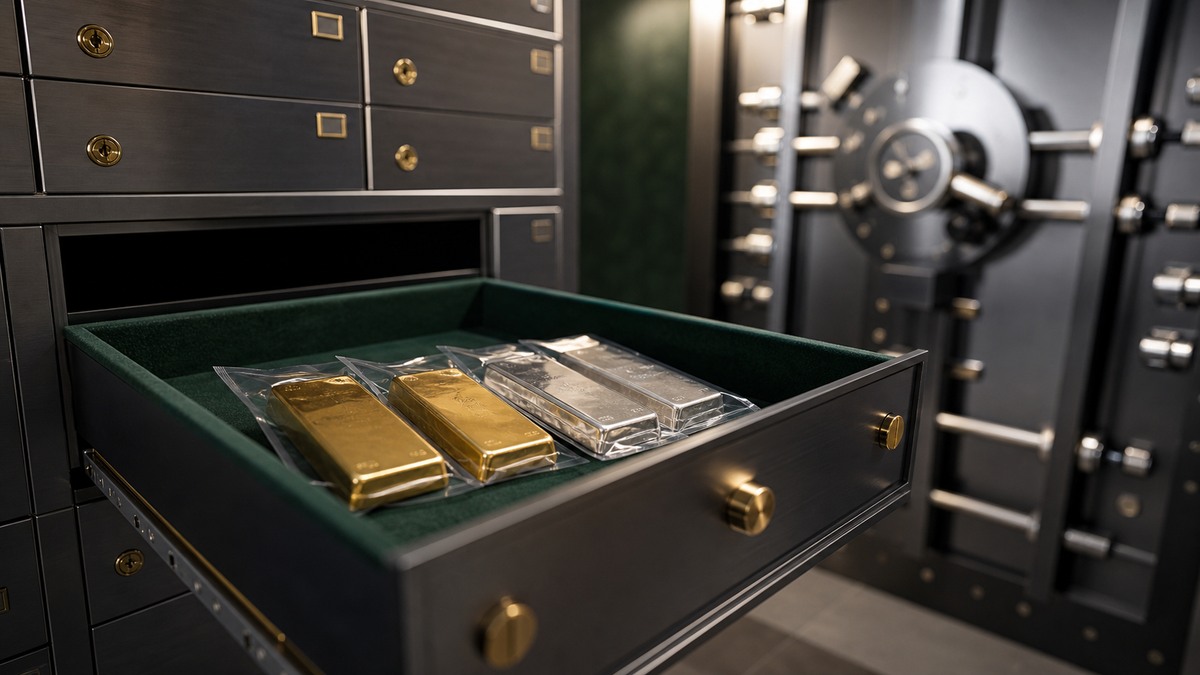
Where to store physical gold and silver depends on what you are trying to balance: access, privacy, cost, insurance, liquidity, and operational risk. A home safe can offer direct access but puts more responsibility on the owner. A bank safe deposit box may separate metals from the home, but it has access-hour and insurance limitations. A private vault or depository can provide professional storage options, but it adds fees, paperwork, and reliance on a third party.
This guide is about personally owned physical metals — coins, rounds, and bars held outside a retirement account. It is not a Gold IRA storage article. IRA-owned metals follow separate custody and depository rules and should not be treated as the same decision.
Quick answer: where to store physical gold and silver
The short answer is that there is no universal best place to store physical gold and silver. Each storage option solves one problem while creating another.
- Home storage may be convenient and private, but it requires the owner to think carefully about security, insurance, household risk, and recordkeeping.
- A bank safe deposit box may keep metals away from the home, but access is limited to bank hours and contents are generally not automatically insured by the FDIC.
- A private vault or depository may offer professional storage, inventory records, and insurance structures, but it costs money and requires trust in a third-party custodian or storage company.
A practical storage plan usually starts with questions, not products: How often do you need access? How much value are you storing? Do you have insurance coverage? How would heirs locate records? How would you sell later? What risks are you trying to reduce, and what new risks does the storage method add?
First, define what you need storage to do
Before comparing a home safe, bank box, or private vault, define the job the storage method needs to perform. “Secure storage” sounds simple, but different buyers mean different things by it.
For a small starter purchase of widely recognized coins, someone may care most about privacy, simplicity, and keeping records organized. For a larger physical silver position, space and weight can become more important because silver usually takes up much more room per dollar of value than gold. For someone who plans to sell through a dealer later, documentation, packaging, and a clear chain of custody may matter more than day-to-day access.
Useful factors to compare include:
- Access: Can you reach the metals when needed, and are there business-hour restrictions?
- Security responsibility: Who is responsible for preventing loss, theft, damage, or mishandling?
- Insurance: Are the metals insured, under what terms, and with what exclusions or limits?
- Cost: Are there one-time costs, recurring fees, minimums, or added administrative charges?
- Privacy: Who knows about the storage arrangement, and what records are created?
- Liquidity: How easy is it to retrieve, ship, verify, or sell the metals later?
- Estate and emergency planning: Could a trusted person locate records and understand what exists without exposing unnecessary details?
The goal is not to make storage complicated. The goal is to avoid buying metals first and only then realizing that the storage plan is unclear.
Option 1: storing gold and silver at home
Home storage is the most direct form of self-custody. The owner holds the physical metals personally and does not rely on a bank box or private storage provider for routine access.
The main advantage is control. You can decide where the metals are kept, when to access them, how to organize records, and whether to move or sell them. There are no bank hours, vault withdrawal processes, or storage account forms for ordinary access.
The tradeoff is that the owner also accepts more responsibility. Home storage requires a sober look at household risk, privacy, insurance, documentation, and how other trusted people would handle an emergency. This article will not provide tactical security instructions, but the high-level point is simple: direct control also means direct responsibility.
Home storage may be easier for small amounts of gold than for large amounts of silver. Gold is dense and compact. Silver is much bulkier for the same dollar amount, which can make space, organization, and transport more cumbersome. That does not make one metal better than the other; it just means storage should be part of the purchase decision.
Potential advantages of home storage:
- Direct access without business-hour restrictions.
- Fewer third-party storage relationships.
- Simple ownership control for small, well-documented holdings.
- No recurring vault or box rental fee, aside from any equipment, insurance, or household planning costs.
Potential drawbacks of home storage:
- Owner is responsible for security decisions and privacy discipline.
- Insurance may be limited, excluded, or require special scheduling or riders.
- Household events such as fire, water damage, theft, or confusion during a move can create risk.
- Estate planning can become messy if records are poor or trusted people do not know what exists.
- Large silver holdings can be heavy and space-consuming.
Storage and authenticity are connected. Records, invoices, packaging, photos, and careful handling can make later verification and resale easier.
Option 2: using a bank safe deposit box
A bank safe deposit box separates physical metals from the home and places them inside a rented box at a bank or credit union. For some readers, that separation may feel cleaner than keeping metals at home.
The appeal is straightforward. A bank facility may reduce certain household risks, and the box can be useful for documents, small valuables, and compact items. For physical gold, the size-to-value ratio can make a small box practical. For larger silver holdings, box size and weight limits may become more relevant.
The limitations matter. Safe deposit boxes are usually accessible only during bank hours and according to the institution’s rules. If a reader wants immediate access at night, on a weekend, or during a bank closure, a safe deposit box may not fit that need. Contents also require careful documentation, and the rental agreement controls important terms.
Readers should not assume a safe deposit box is federally insured just because it is located inside a bank. FDIC deposit insurance generally applies to bank deposits, not the contents of a rented box. Box contents may require separate insurance or other coverage, depending on the bank agreement and the owner’s insurance policies.
Potential advantages of a bank safe deposit box:
- Metals are stored away from the home.
- Costs may be modest for smaller boxes, depending on institution and availability.
- Useful for compact physical gold and important ownership documents.
- May provide a structured location known to the account holder and, if planned correctly, authorized parties.
Potential drawbacks of a bank safe deposit box:
- Access is limited to bank hours and institutional procedures.
- FDIC deposit insurance does not generally insure box contents.
- The bank may not know, verify, or insure what is inside the box.
- Box access after incapacity or death can be complicated without proper authorization and estate planning.
- Not all branches offer boxes, and availability can be limited.
A bank box can be part of a storage plan, but it should not be treated as automatically insured or automatically accessible. The rental agreement, insurance coverage, and authorization structure matter.
Option 3: using a private vault or depository
A private vault or depository is a third-party storage provider that holds metals for customers. This category can include precious-metals depositories, private vault companies, and storage programs connected to dealers or platforms. The details vary widely, so the terms matter more than the label.
Private vault storage may appeal to readers who want professional storage, inventory records, potential insurance arrangements, and a more formal process for buying, holding, transferring, or selling metals. Some providers offer allocated or segregated storage language, audit procedures, account statements, and shipping or liquidation processes.
Those features can be useful, but they are not automatic proof of suitability. A reader still needs to understand who owns the metals, how they are identified, whether storage is allocated or pooled, what insurance applies, what fees are charged, how withdrawals work, and what happens if the provider changes policies or experiences financial or operational issues.
Potential advantages of private vault storage:
- Professional storage environment and formal inventory procedures.
- Possible insurance structures, depending on provider terms.
- Useful for larger holdings or owners who do not want home storage responsibility.
- May simplify certain resale, transfer, or dealer buyback workflows if the vault and dealer relationships are clear.
- May provide statements and documentation useful for records.
Potential drawbacks of private vault storage:
- Recurring fees, minimums, withdrawal fees, shipping fees, or administrative charges may apply.
- The owner relies on a third party and must understand the contract.
- Access may require notice, identity verification, shipping, appointment, or withdrawal processes.
- Terms such as “allocated,” “segregated,” “insured,” and “audited” need to be read carefully.
Comparison table: home safe vs bank box vs private vault
| Storage option | Best fit conceptually | Main strengths | Main tradeoffs | Questions to verify |
|---|---|---|---|---|
| Home safe / home storage | Owners who want direct access and are prepared to manage responsibility | Immediate access, direct control, no routine third-party storage process | Owner handles security, privacy, insurance, records, household risk | Insurance limits, recordkeeping, emergency access, estate instructions |
| Bank safe deposit box | Owners who want metals away from the home and can accept bank-hour access | Physical separation from home, familiar institution, may be cost-effective for compact holdings | Limited access hours, contents not generally FDIC-insured, rental agreement controls terms | Box agreement, insurance coverage, authorized users, death/incapacity procedures |
| Private vault / depository | Owners who want professional storage and formal inventory procedures | Storage infrastructure, records, possible insurance arrangements, scalable for larger holdings | Recurring fees, provider reliance, contract complexity, withdrawal procedures | Allocated/segregated terms, insurance, audit process, fees, withdrawal/shipping rules |
This table is not a recommendation. It is a way to compare tradeoffs before choosing a storage path.
Insurance and documentation questions
Insurance is one of the easiest areas to misunderstand. Readers should not assume physical gold and silver are fully covered under a standard homeowners or renters policy. Some policies may have limits, exclusions, documentation requirements, or special scheduling procedures for valuables. Bank safe deposit boxes have their own issues, and private vaults require careful review of provider insurance terms.
Before relying on any storage method, readers should consider asking:
- Does my policy cover precious metals, bullion, coins, or collectibles?
- Are there sublimits for theft, mysterious disappearance, fire, flood, or other events?
- Is special scheduling or a rider required?
- What documentation is needed for a claim?
- Are bank box contents covered by my policy, the bank, a separate policy, or not at all?
- If using a private vault, what exactly does the provider’s insurance cover and exclude?
- Are metals valued at purchase price, replacement cost, market value, or another method?
Documentation also matters for resale and estate clarity. Useful records may include purchase invoices, product descriptions, serial numbers where applicable, photos, certificates or assay cards if relevant, packaging details, storage account statements, insurance documents, and a private inventory list.
This does not mean sensitive details should be casually shared. It means the owner should maintain organized records in a way that supports insurance, resale, and trusted-person access if needed.
How storage changes liquidity
Storage is not just about holding metals. It can affect how easy it is to sell them later.
Home-stored metals may be quick to access, but the owner may need to verify condition, gather documentation, compare buyback quotes, arrange shipping, or visit a local dealer. If records are missing or packaging has been damaged, resale may be less smooth.
A bank safe deposit box may keep metals organized and away from the home, but access depends on bank procedures. If a buyer wants to sell quickly on a weekend or during a closure, that can be inconvenient. It may also require planning if the metals need to be shipped to an online dealer.
Private vault storage may simplify some resale workflows if the vault has established processes or dealer relationships. But the owner should understand fees, withdrawal timing, shipping steps, identity checks, minimums, and whether the provider’s buyback option is competitive. Convenience is useful only when the costs and terms are clear.
This is why storage belongs in the buying decision. Coins, rounds, and bars do not all behave the same when it is time to store, verify, transport, or sell.
Common mistakes to avoid
A good physical metals storage plan is usually boring: clear records, realistic risk assumptions, and no overconfident claims. Common mistakes include:
- Buying first and planning storage later. Storage should be considered before ordering, especially for larger purchases or bulky silver.
- Assuming a bank box is federally insured. FDIC deposit insurance generally applies to bank deposits, not safe deposit box contents.
- Assuming homeowners insurance automatically covers bullion. Coverage depends on the policy, limits, exclusions, and documentation.
- Ignoring estate access. If no trusted person can locate records or gain authorized access after incapacity or death, the plan may fail when it matters.
- Overlooking silver bulk. Silver can require more space and handling than new buyers expect.
- Using vague vault terms. “Allocated,” “segregated,” “insured,” and “audited” should be defined in the provider’s actual agreement.
- Sharing too much detail. Privacy is part of risk management. This article avoids tactical security advice, but unnecessary disclosure can create problems.
- Forgetting resale. Storage should preserve documentation and condition so future selling is not harder than necessary.
None of these points mean a reader should choose one specific storage method. They mean the storage decision deserves the same due diligence as the purchase itself.
Questions to ask before choosing a storage option
Use these questions as a planning checklist:
- How much value am I storing now, and could that change materially later?
- Am I storing mostly gold, mostly silver, or both?
- How often do I realistically need access?
- What storage risks am I trying to reduce?
- What new risks does this storage method create?
- What insurance, if any, applies to this storage location?
- What records would support an insurance claim, resale, or estate process?
- Who, if anyone, should have authorized access in an emergency?
- If I sell later, how will the metals move from storage to buyer or dealer?
- Are there recurring costs, withdrawal fees, shipping fees, or minimums?
- Are the storage terms documented in writing?
Physical metals dealer research option
Research physical metals dealer policies
If you are comparing personally owned coins, bars, or rounds outside an IRA, JM Bullion lists online pricing for physical gold, silver, platinum, palladium, and related bullion products. Use dealer pricing as one research input, not as a recommendation to buy.
- Compare premiums, spreads, shipping, insurance, storage, and payment terms before placing an order.
- Review authenticity, return, cancellation, buyback, and liquidation policies in writing.
- Consider qualified tax, financial, legal, or insurance guidance when personal circumstances require it.
Affiliate disclosure: SilverGoldInvestor.com may receive compensation if you visit or purchase through this link. Compensation does not change our educational cautions or create a personalized recommendation.
Bottom line
Where to store physical gold and silver is a practical tradeoff between control, access, insurance, privacy, cost, and liquidity. A home safe, bank safe deposit box, and private vault can each make sense in different situations, but none should be treated as automatically best or automatically risk-free.
For personally owned physical metals, the cleanest next step is to write down what storage needs to accomplish before buying more metal. Then compare options using the same questions: Who has access? What is insured? What does it cost? How are records kept? How would the metals be sold or transferred later?
That approach keeps the decision educational, realistic, and less reactive.