
Physical metals education
Selling Bullion Back to a Dealer: Buyback Questions to Ask Before You Buy
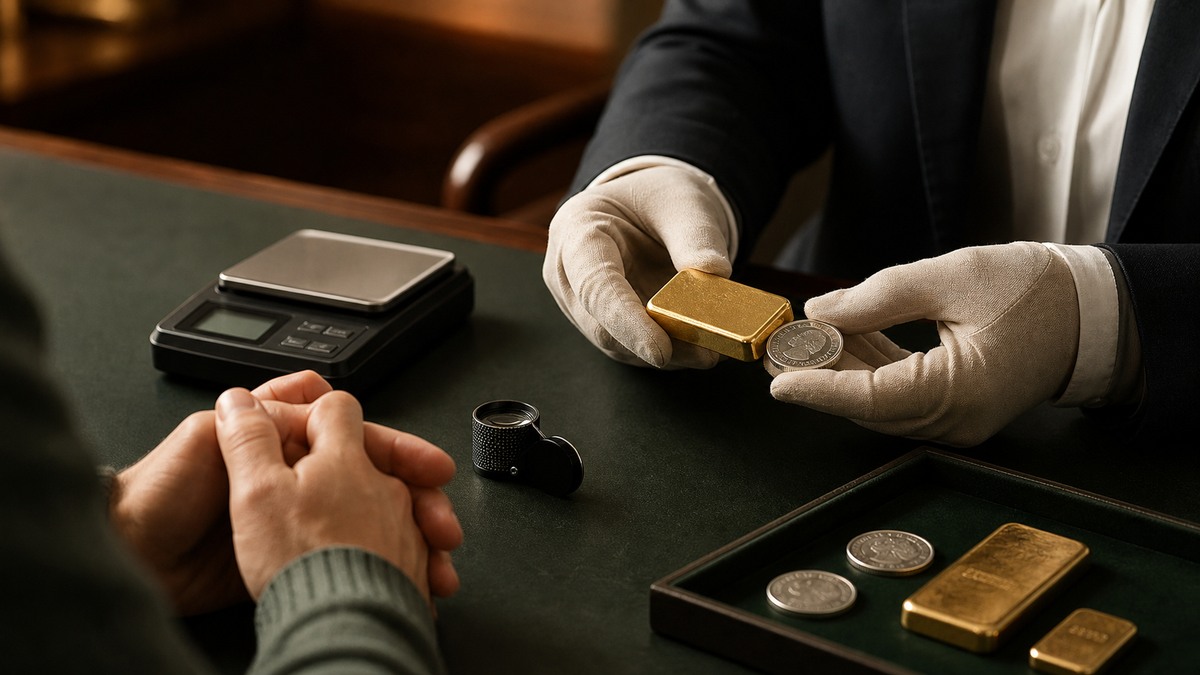
Bullion dealer buyback questions matter because buying physical metals is only one side of the decision. If you buy gold or silver coins, rounds, or bars for personal ownership, you also need to understand how you might sell them later, what price reference the dealer may use, how wide the buy/sell spread could be, and what steps are required before payment.
The short version: a dealer’s retail sell price is not the same as its buyback price. Physical metals can be liquid, especially widely recognized bullion products, but liquidity is not automatic, instant, or guaranteed at the price a buyer hopes for. A buyback policy helps you understand the process before you need it.
This article focuses on personally owned physical metals held outside a retirement account. It is not a Gold IRA article and does not cover IRA custodians, retirement-account rules, or IRA depository storage. If you are interested in Gold IRAs, start with the Gold IRA basics guide.
Quick answer: selling bullion back to a dealer starts before you buy
A bullion dealer buyback question explains how a dealer may purchase physical gold, silver, platinum, or palladium products from customers. It can cover accepted products, minimums, pricing method, shipping instructions, verification, payment timing, and conditions that may change the final offer.
The important point is that a buyback policy is not only useful when selling. It is useful before buying because it affects the owner’s future exit options.
A careful buyer should ask:
- Does this dealer publicly explain how buybacks work?
- Which products are easiest to resell?
- Is the buyback price tied to spot, a posted bid price, or a quote that changes by market conditions?
- What fees, shipping costs, insurance steps, or verification delays could apply?
- How long does payment usually take after the metals arrive and are accepted?
- What happens if the dealer rejects, reprices, or questions the items?
This does not mean every buyer must sell back to the same dealer. It does mean the purchase should be made with resale reality in mind.
What a bullion buyback policy means
A bullion buyback policy is a dealer’s process for buying metals from customers. Some dealers publish general instructions on their websites. Others ask sellers to call for a live quote. Some may only buy certain products, require a minimum transaction size, or change buyback terms depending on market conditions and inventory needs.
A policy may describe:
- Accepted metals and products.
- Whether the dealer buys back products it did not originally sell.
- Minimum quantity or minimum dollar amount.
- How long a quoted price is valid.
- Whether the seller must ship metals within a specific time window.
- Whether the package must be insured.
- How products are inspected, counted, tested, or verified.
- How and when payment is issued.
- Conditions that may reduce, delay, or cancel the buyback.
The policy should not be treated as a guarantee that the dealer will buy every item at every time. Dealers can change inventory needs, spreads, payment methods, and accepted products. Market volatility can also affect quoted prices and timing.
For a reader comparing dealers, a clear buyback process is a trust signal. A vague or hard-to-find process is not automatically disqualifying, but it is a reason to ask more questions before sending money.
Why buyback questions matter before you buy
Many first-time bullion buyers focus on the front-end price: the coin, bar, or round they want and the premium over spot. That matters, but the future sell side matters too.
If two products have similar purchase prices, the one with broader recognition and clearer resale demand may be easier to sell later. A widely recognized sovereign coin or common bullion bar may have more dealer demand than an obscure private-mint item, damaged product, or collectible piece with a premium the next buyer may not value.
The buyback question also helps separate “low purchase premium” from “good total economics.” A product that is cheap to buy may still be less attractive if dealers offer a weaker bid, require extra verification, or treat it as less marketable. On the other hand, a higher-premium product is not automatically better. The useful comparison is the likely round-trip cost: what you pay to buy, what you might receive to sell, and what costs or delays sit between the two.
The core terms: spot, bid, ask, premium, and spread
Before reading a buyback policy, it helps to know the pricing language.
Spot price is a market reference price for the metal. It is not usually the exact retail price to buy a finished bullion product.
Ask price is the price at which a dealer may sell a product. For retail bullion, this usually includes the metal value plus a premium.
Bid price is the price at which a dealer may buy a product from a seller. Dealers may post bid prices for common products or quote them live.
Premium is the amount over metal value that appears in the retail purchase price. It can reflect fabrication, minting, distribution, product demand, inventory, shipping, insurance, and dealer margin.
Spread is the gap between the dealer’s sell price and buy price. The spread is one of the main frictions physical-metals owners should understand. It does not mean a dealer is doing something improper; dealers have costs and risk. But it does mean the owner may need a meaningful metal-price move just to break even after purchase premium and resale spread.
For example, if a silver round is sold above spot and later bought back below the dealer’s retail sell price, the buyer’s future outcome depends on both metal price movement and the spread. That is why “Can I sell it?” is only the first question. “At what likely spread, under what process, and after what costs?” is the better question.
Questions to ask about dealer buyback questions
Use these questions before buying from a dealer, especially if you expect the same dealer to be one possible exit route.
1. Do you publish your buyback process?
A clear public policy is easier to compare than vague language. Look for instructions that explain whether the seller must call, lock a price, ship within a certain time, include documentation, and wait for inspection before payment.
If the process is only handled by phone, ask what steps will be confirmed in writing before metals are shipped.
2. Which products do you normally buy back?
Ask whether the dealer buys back:
- Gold bullion coins.
- Silver bullion coins.
- Gold bars.
- Silver bars.
- Silver rounds.
- Private-mint products.
- Government-mint products.
- Products from other dealers.
- Opened, toned, scratched, or imperfect items.
Product acceptance can matter more than buyers expect. A dealer may prefer common, recognizable products over unusual sizes, obscure mint marks, damaged packaging, or collectible items whose value depends on condition.
3. How is the buyback price calculated?
Ask whether the dealer uses a posted bid price, a live quote, a percentage of spot, a product-specific bid, or another method.
Also ask how long the quote is valid. Some dealers may lock a price only after a phone call or online confirmation. Others may require shipment within a specific window. If metals arrive late, damaged, incomplete, or different from the description, the final price may change.
4. Are there minimums?
Some dealers may have minimum transaction amounts for buybacks. A small buyer should understand this before assuming any dealer will buy back a single coin, partial tube, or small silver lot.
Minimums can affect liquidity. If a dealer only handles buybacks above a certain dollar value, a smaller seller may need to use another route, such as a local coin shop, another online dealer, or a private sale. Each route has different risks and tradeoffs.
5. Who pays for shipping and insurance?
When selling metals to an online dealer, the seller may need to package, ship, and insure the metals. Shipping instructions matter. So do tracking, signature requirements, declared value, and what happens if a package is delayed, damaged, or lost.
Do not assume shipping is free or riskless. Before mailing valuable metals, understand the dealer’s requirements and the carrier’s insurance limits and exclusions.
6. What verification happens after arrival?
Dealers may count, inspect, test, or otherwise verify metals before paying. This protects the dealer from counterfeit, damaged, incomplete, or misdescribed items.
Ask what happens if there is a discrepancy. Useful policy details include how the dealer communicates issues, whether the seller can request return shipment, who pays return shipping, and whether the quoted price can be adjusted.
7. How quickly is payment sent?
Payment timing can vary. A dealer may wait until metals are received and verified. Payment method can also matter: check, ACH, wire, or another method may have different fees or timelines.
If liquidity speed matters to the seller, the relevant question is not only “Will the dealer buy?” It is “When does the seller actually receive usable funds after accepting a quote and shipping metals?”
8. What situations can change the offer?
Ask what can lead to repricing, rejection, delay, or cancellation. Examples may include product mismatch, late shipment, condition issues, suspected counterfeit items, incomplete quantities, market disruption, or failure to follow shipping instructions.
This is not about expecting problems. It is about understanding the rules before a stressful sale.
Product types and resale friction
Not all physical metals have the same resale profile.
Common bullion products are often easier for dealers to price and verify. These may include widely recognized government-mint coins, common one-ounce gold bars from reputable refiners, and standard silver rounds or bars from recognized mints. That does not make them risk-free or universally best. It simply means familiarity can reduce friction.
More specialized products may require more care:
- Collectible or numismatic coins: These may carry premiums tied to condition, rarity, grading, or collector demand. A bullion dealer may not pay the same premium another collector would.
- Odd-size bars or rounds: Unusual sizes may have a smaller buyer pool.
- Damaged or handled products: Scratches, dents, missing assay cards, broken seals, or questionable packaging can affect resale.
- Obscure private-mint items: These may still contain real metal, but recognition can matter when selling quickly.
- Large silver lots: Silver can be bulky and heavy, which may complicate shipping, storage, and local sale logistics.
The practical lesson is not “only buy one type of product.” It is to know the likely exit route for the type of product being purchased.
Shipping, verification, and payment timing
A buyback policy should be read like an operations checklist.
For an online sale, the sequence may look like this:
- Seller requests a quote.
- Dealer confirms products, quantities, price, and timing.
- Seller ships the metals according to the dealer’s instructions.
- Dealer receives and verifies the package.
- Dealer confirms acceptance or reports discrepancies.
- Dealer sends payment by the agreed method.
Each step creates a question.
If the price is locked, when does the lock begin and end? If shipment is late, what happens? If the dealer receives the metals after a sharp market move, is the quote still valid? If the carrier has a problem, who bears the risk? If the package arrives but the dealer says the count or condition is different, what documentation helps resolve it?
For meaningful transactions, written confirmation matters. Keep order confirmations, invoices, tracking numbers, photos of packaged contents when appropriate, insurance receipts, and communication records. The goal is not paperwork for its own sake. The goal is to reduce confusion if there is a dispute.
How storage and records affect liquidity
Liquidity is not only about whether a dealer has a buyback page. It is also about how the owner stores and documents the metals.
Helpful records may include:
- Purchase invoice or receipt.
- Product name, mint, weight, and metal type.
- Photos of bars, rounds, or coins, especially serial numbers or assay packaging when applicable.
- Storage location records kept securely and appropriately.
- Insurance documentation if coverage exists.
- Notes about original packaging, tubes, capsules, or assay cards.
- Estate or trusted-contact instructions handled carefully and privately.
Poor records can slow down resale, especially for heirs or family members who did not make the original purchase. A future seller may not know what the items are, where they came from, whether they are complete, or which dealer might buy them.
Storage also matters. Metals kept in a way that damages packaging, creates confusion, or mixes products without labels can be harder to inventory. A safe storage plan supports a cleaner exit plan.
Buyback policy comparison checklist
Use this checklist when comparing dealers. It is designed for education, not as a recommendation system.
| Question | Why it matters |
|---|---|
| Is the buyback policy easy to find? | Clear terms are easier to compare before purchase. |
| Does the dealer buy products it did not originally sell? | This affects future flexibility. |
| Which products receive stronger bids? | Common products may be easier to resell than obscure or damaged items. |
| Are buyback prices posted or quoted live? | Pricing method affects transparency and timing. |
| How long is a quote valid? | Metal prices move, and late shipment may affect the deal. |
| Are there minimum transaction sizes? | Small sellers may need another exit route. |
| Who pays shipping and insurance? | Selling costs affect net proceeds. |
| What verification is required? | Testing and inspection can affect timing and final acceptance. |
| How quickly is payment sent? | Liquidity includes the time to receive usable funds. |
| What can cause repricing or rejection? | Clear exception terms reduce surprises. |
A buyer does not need perfect answers to every question. But if a dealer cannot explain the process in plain language, that is a reason to slow down and compare alternatives.
Mistakes to avoid
The biggest mistake is treating the purchase price as the whole decision. A low premium can look attractive, but the resale path may be less clear than expected.
Other common mistakes include:
- Assuming a dealer will always buy back every product it sells.
- Assuming buyback prices equal retail sell prices.
- Ignoring shipping, insurance, and payment timing.
- Buying obscure products without understanding who would buy them later.
- Confusing collectible value with bullion liquidity.
- Losing receipts, assay cards, packaging, or product records.
- Waiting until a stressful moment to learn the dealer’s buyback process.
- Treating online dealer policies, local coin shop offers, and private sales as interchangeable.
A calmer approach is to ask exit questions before buying. That does not guarantee a future outcome, but it gives the buyer a more complete view of the tradeoff.
Physical metals dealer research option
Research bullion dealer buyback policies
If you are comparing personally owned coins, bars, or rounds outside an IRA, JM Bullion lists online pricing for physical gold, silver, platinum, palladium, and related bullion products. Use dealer pricing as one research input, not as a recommendation to buy.
- Compare premiums, spreads, shipping, insurance, storage, and payment terms before placing an order.
- Review authenticity, return, cancellation, buyback, and liquidation policies in writing.
- Consider qualified tax, financial, legal, or insurance guidance when personal circumstances require it.
Affiliate disclosure: SilverGoldInvestor.com may receive compensation if you visit or purchase through this link. Compensation does not change our educational cautions or create a personalized recommendation.
Bottom line
Bullion dealer buyback questions are part of the real physical-metals purchase decision. A buyer is not only choosing what to buy today. They are also shaping how easy or difficult it may be to sell later.
The safest article conclusion is not “use this dealer” or “buy this product.” It is simpler: understand the buyback process, compare the likely spread, keep clean records, and avoid assuming that future liquidity will be instant, guaranteed, or available at a desired price.