
Physical metals education
Silver Coins vs Rounds vs Bars: What Is the Difference?
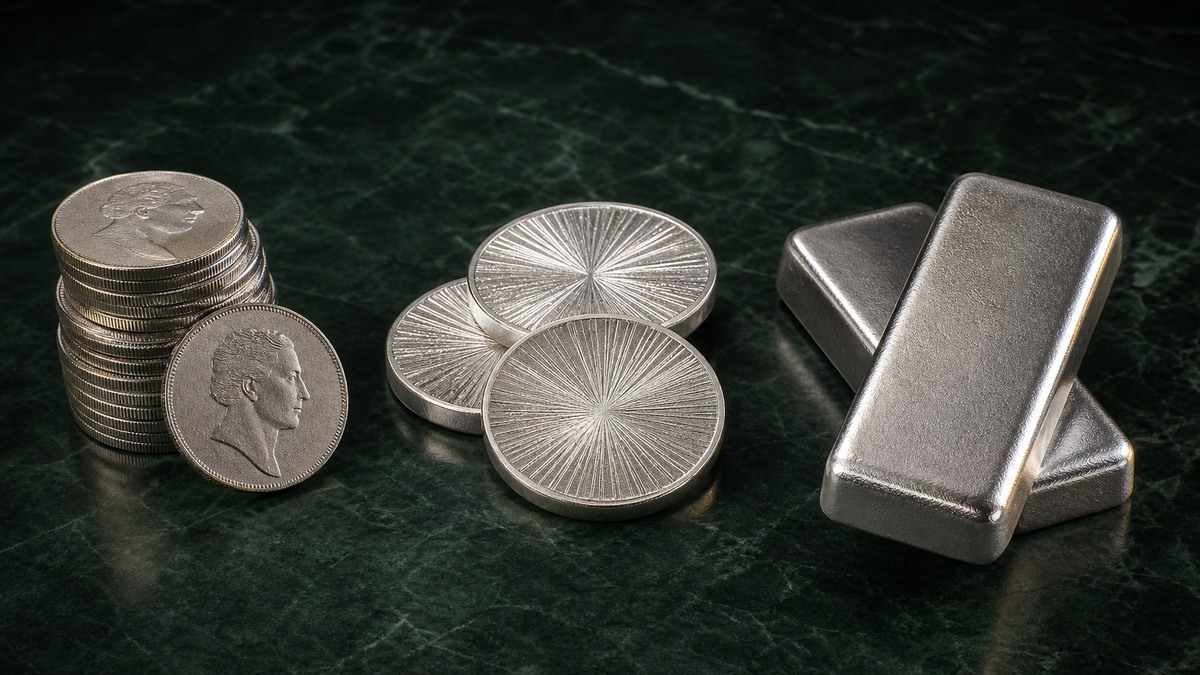
Silver coins vs rounds vs bars is one of the first comparisons new physical silver buyers run into. The short version: silver coins are usually issued by a government mint and may carry legal-tender face value, silver rounds are coin-shaped bullion pieces usually made by private mints, and silver bars are rectangular bullion pieces made in many sizes by mints or refiners.
All three can contain investment-grade silver. The practical differences are issuer, recognizability, premium over spot, storage convenience, resale path, and how easily a buyer can compare similar products.
This article focuses only on personally owned physical silver — bullion bought directly and stored outside a retirement account. It is not a Gold IRA article and does not cover IRA custody or retirement-account storage rules.
Quick answer: silver coins, rounds, and bars are not the same
For personally owned physical silver, the three formats usually break down this way:
- Silver coins are often government-mint bullion products. They may be widely recognized and easy to identify, but they often carry higher premiums than generic products.
- Silver rounds look like coins but are usually made by private mints. They do not usually have legal-tender status, but they may offer lower premiums than government coins.
- Silver bars are rectangular bullion products. They can be efficient to stack and store, especially in larger sizes, but resale flexibility depends on size, brand, condition, and dealer policy.
- No format is automatically best. A buyer still has to compare total delivered cost, authenticity, storage, resale options, and the difference between bullion value and collectible value.
A careful silver buyer should understand the format before comparing dealers or reacting to the lowest visible price.
What silver bullion coins are
Silver bullion coins are usually produced by a government mint or an official mint program. They often have a stated weight and purity, a recognizable design, and a legal-tender face value. The face value is usually symbolic; the market price is generally based on silver content plus a premium.
Common bullion coins are designed for precious-metals buyers, not just collectors. Many new buyers like them because the product identity is straightforward: a known mint, a known design, and a standard silver content.
That recognition can matter later. If a buyer wants to request buyback quotes from dealers or local coin shops, widely recognized bullion coins may be easier to discuss than obscure private products. Recognition does not guarantee a good resale price, but it can reduce confusion.
The tradeoff is cost. Government-mint silver coins often cost more per ounce than generic rounds or bars. Limited-edition, graded, proof, or collectible versions can carry even higher premiums that may not behave like plain bullion.
What silver rounds are
Silver rounds are round, coin-shaped silver bullion pieces usually produced by private mints. They may look similar to coins at first glance, but they are not usually legal tender and are not issued as sovereign currency.
Rounds are often made in one-troy-ounce sizes, though other sizes exist. Many are stamped with weight and purity, such as “1 troy ounce .999 fine silver.” Designs vary widely, from simple private-mint logos to themed artwork.
The main appeal of rounds is that they can be a straightforward way to buy silver by weight. Because they are not government coinage, they may have lower premiums than popular bullion coins. That can matter to buyers who care most about ounces of silver for the total dollars spent.
The tradeoff is recognition. Some private-mint rounds are well known in the bullion market, while others are less familiar. A buyer should pay attention to mint reputation, product markings, authenticity, packaging, and buyback policies before assuming all rounds will be treated equally at resale.
What silver bars are
Silver bars are rectangular bullion products. They can be minted bars with clean, pressed designs, or cast/poured bars with a rougher appearance. Common retail sizes include 1 ounce, 5 ounces, 10 ounces, kilo bars, and 100-ounce bars, though availability changes over time.
Bars are often valued for storage efficiency. A stack of 10-ounce bars can be easier to organize than many individual one-ounce pieces. Larger bars may also carry lower premiums per ounce because manufacturing, packaging, and distribution costs are spread across more silver.
That efficiency comes with tradeoffs. Larger bars are less flexible if the owner wants to sell only a small amount. A 100-ounce bar can require one larger transaction, while one-ounce coins or rounds can be sold in smaller increments.
Bars can also depend heavily on brand recognition and condition. Serial numbers, packaging, bar style, refiner reputation, and dealer buyback rules may matter. A low premium is useful only if the product can later be verified and sold through a realistic channel.
Silver coins vs rounds vs bars: side-by-side comparison
| Factor | Silver coins | Silver rounds | Silver bars |
|---|---|---|---|
| Typical issuer | Government or sovereign mint | Private mint | Private mint, refiner, or mint |
| Shape | Coin | Coin-shaped round | Rectangular bar |
| Legal-tender status | Often yes, though face value is usually symbolic | Usually no | Usually no |
| Common buyer appeal | Recognition and familiarity | Lower-cost ounces and design variety | Efficient stacking and larger sizes |
| Premium pattern | Often higher than rounds/bars | Often lower than government coins | Often lower per ounce in larger sizes |
| Resale flexibility | Often strong for well-known coins | Depends on mint recognition and dealer policy | Depends on size, brand, and buyer demand |
| Storage | Tubes/boxes; many small pieces | Tubes/boxes; many small pieces | Compact stacks; larger units |
| Beginner risk | Overpaying for collectible versions | Assuming all private rounds are equally recognized | Buying sizes that are harder to resell in pieces |
This comparison is a starting point, not a recommendation. Actual prices and resale quotes vary by dealer, payment method, shipping, market conditions, and the specific product.
When silver coins may fit better
Silver coins may fit a buyer’s goals when recognition, standardization, and easy identification matter more than getting the lowest possible premium.
A new buyer may find government-mint bullion coins easier to research. Product names, weights, and purities are commonly published and easy to compare. Dealers and local coin shops are often familiar with major bullion coin programs, which can make future buyback conversations simpler.
Coins may also be useful when the buyer wants smaller units. One-ounce coins can be sold or gifted in increments, documented in household records, and stored in tubes or mint packaging.
The downside is that popular silver coins often command higher premiums. During periods of strong retail demand, premiums can widen. Buyers should compare the full delivered price, not just the spot price of silver.
Buyers should also be careful not to drift from bullion coins into collectible coins without understanding the difference. A graded or limited-edition coin may be priced for rarity, condition, packaging, or collector demand — not just silver content.
When silver rounds may fit better
Silver rounds may fit buyers who want simple one-ounce bullion pieces and are comfortable evaluating private-mint products.
Rounds can be practical for ounce-by-ounce accumulation. They are easy to count, often stack in tubes, and may cost less per ounce than government-mint coins. For buyers focused on silver weight rather than sovereign-mint branding, that lower premium can be appealing.
Rounds also offer design variety. Some buyers like private-mint designs, seasonal designs, historical themes, or simple generic rounds. Design preference is fine as long as the buyer understands whether they are paying a bullion premium or a collectible premium.
The main caution is resale recognition. A well-known private mint may be easier to resell than a random round with unclear origin. A buyer should ask dealers how they buy back private rounds, whether they pay different rates for recognized brands, and whether packaging or condition affects the quote.
When silver bars may fit better
Silver bars may fit buyers who care about storage efficiency, larger silver amounts, and comparing premium per ounce across sizes.
A 10-ounce bar, for example, can be easier to organize than ten loose one-ounce pieces. Larger bars may reduce packaging clutter and can sometimes carry lower premiums per ounce. That makes bars a common consideration for buyers who want to hold more ounces in a compact format.
The tradeoff is divisibility. If the owner later wants to sell only a small amount, a larger bar may be inconvenient. Selling one 100-ounce bar is different from selling ten 10-ounce bars or one hundred 1-ounce pieces.
Bars also require attention to product source. Buyers should look for clear weight and purity markings, reputable manufacturers, realistic documentation, and a resale path before buying. Sealed packaging, serial numbers, and recognizable refiner names may help, but none of those remove the need for careful verification.
Premiums, spreads, and total delivered cost
The silver spot price is not the same as the price a retail buyer pays. Retail bullion usually sells for spot plus a premium. The premium may reflect manufacturing, minting, distribution, dealer margin, payment method, demand, packaging, and product type.
Silver coins often have higher premiums than rounds or bars. Rounds may offer a middle ground: smaller one-ounce pieces with potentially lower premiums than government coins. Bars may be cheaper per ounce as size increases, though the best value depends on the exact product and dealer.
Buyers should also understand spreads. The price to buy a product and the price a dealer offers to buy it back are not the same. A low purchase premium is helpful, but the eventual resale spread matters too.
For a plain-English explanation of how retail bullion prices differ from metal quotes, see the guide to spot price vs premium when this cluster is published.
Liquidity and resale considerations
Liquidity is not just “can silver be sold?” The better question is: where, how quickly, at what spread, and with what verification requirements?
Widely recognized silver coins may be easier to quote across multiple dealers. Private rounds and bars can also be liquid, especially from known mints, but the resale path may depend more on brand familiarity, size, packaging, and local market demand.
Large bars may reduce premiums at purchase but can narrow the number of buyers later. A dealer may quote them readily, but a private buyer may be more cautious with a high-value silver bar than with small one-ounce pieces. This is not a reason to avoid bars; it is a reason to think about the resale channel before buying.
Before buying any format, a new buyer can ask:
- Does the dealer publish buyback prices or explain its buyback process?
- Are buyback quotes different for coins, rounds, and bars?
- Does product condition or unopened packaging matter?
- Are larger bars discounted more heavily at resale?
- What identification, shipping, insurance, or minimum transaction rules apply?
Storage, handling, and self-custody
Personally owned silver creates a self-custody problem. Silver is bulky compared with gold by dollar value, so storage planning matters sooner than many beginners expect.
Coins and rounds often come in tubes or boxes. They are easy to count but can take up more space when accumulated in large quantities. Bars can stack more efficiently, especially in 10-ounce, kilo, or 100-ounce sizes.
Handling matters too. Silver can tarnish, spot, or show fingerprints. Cosmetic issues may not change the metal content, but they can affect buyer perception and resale conversations. Keeping products organized, dry, documented, and minimally handled is usually cleaner than leaving loose pieces scattered in unmarked containers.
Security and insurance deserve sober thought. A home safe, bank safe deposit box, or other storage approach each has tradeoffs. Storage choices can affect access, insurance, privacy, documentation, and later resale.
Avoid confusing bullion with collectibles
Bullion is usually bought for metal content. Collectibles are priced partly on rarity, condition, grading, age, demand, or story.
The boundary can get blurry. A silver coin may be bullion, collectible, proof, graded, limited edition, or commemorative. A silver round can also have a themed design that someone values above melt content. A bar from a famous vintage refiner can carry a collector premium.
That does not make collectible premiums wrong. It just means the buyer should know what they are paying for. A beginner who wants simple silver exposure should be cautious about paying large markups for scarcity claims, special packaging, or high-pressure pitches.
A plain-English rule: if the sales conversation focuses more on rarity, limited supply, or future collector demand than on weight, purity, premium, and resale path, the buyer has moved away from simple bullion and should slow down.
Questions to ask before buying silver coins, rounds, or bars
Before choosing a format, a new bullion buyer can use these questions:
- What exact product am I buying — coin, round, or bar?
- Who issued or manufactured it?
- What is the weight and fineness?
- What is the total delivered price including shipping, insurance, payment method, and any minimum-order rules?
- How much is the premium over silver spot?
- What would this dealer pay to buy the same product back today?
- Is the product widely recognized by other dealers or local shops?
- Does packaging, tube condition, serial number, or assay information matter?
- How will I store, document, and insure it?
- Am I paying for bullion value, collectible value, or both?
These questions keep the decision grounded before comparing dealers or choosing a product.
Physical metals dealer research option
Compare silver coins, rounds, and bars
If you are comparing personally owned coins, bars, or rounds outside an IRA, JM Bullion lists online pricing for physical gold, silver, platinum, palladium, and related bullion products. Use dealer pricing as one research input, not as a recommendation to buy.
- Compare premiums, spreads, shipping, insurance, storage, and payment terms before placing an order.
- Review authenticity, return, cancellation, buyback, and liquidation policies in writing.
- Consider qualified tax, financial, legal, or insurance guidance when personal circumstances require it.
Affiliate disclosure: SilverGoldInvestor.com may receive compensation if you visit or purchase through this link. Compensation does not change our educational cautions or create a personalized recommendation.
Bottom line
Silver coins, rounds, and bars can all be legitimate physical silver formats, but they solve different problems. Coins usually emphasize recognition and government-mint familiarity. Rounds often emphasize simple private-mint silver by the ounce. Bars often emphasize storage efficiency and larger-size cost comparisons.
The better question is not “which one is best?” It is “which format matches the buyer’s budget, storage plan, resale expectations, and ability to verify what they own?” For new bullion buyers, the safest starting point is understanding the differences before comparing prices or choosing a dealer.