
Physical metals education
How to Spot Fake Gold and Silver: Authenticity Checks for Bullion Buyers
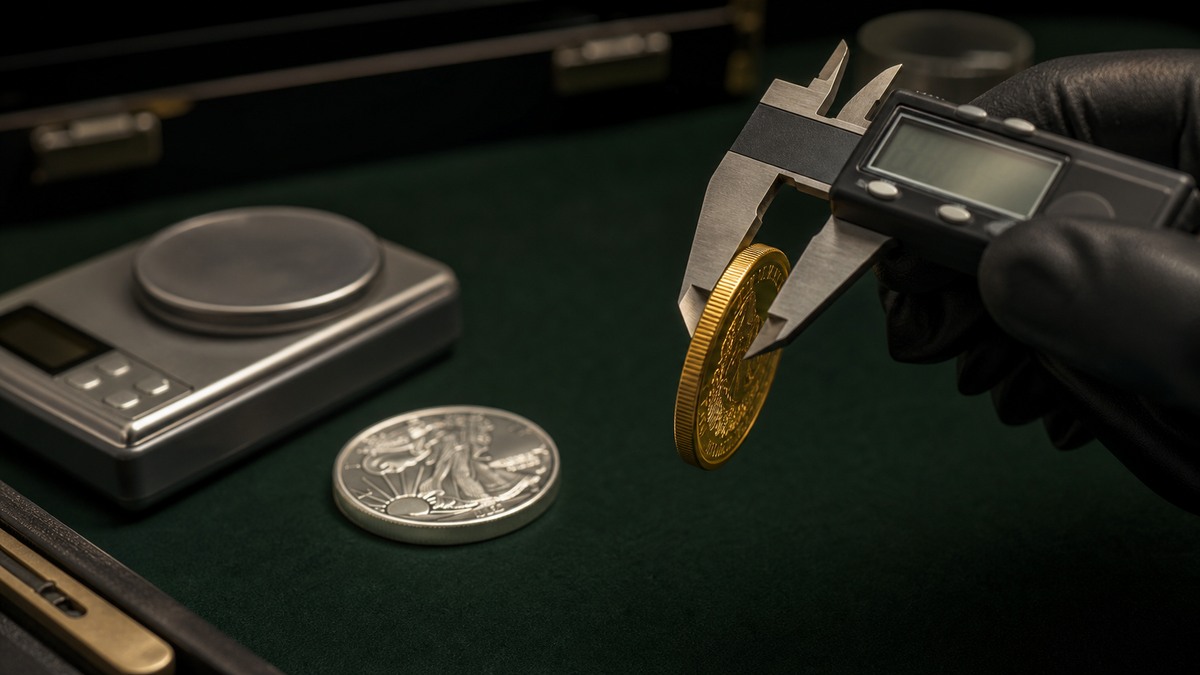
Learning how to spot fake gold and silver starts before the package arrives. The most useful protection is not one magic home test. It is a conservative buying process: choose reputable sellers, understand the exact product, compare the item against official specifications, review packaging and documentation, keep clean records, and use professional non-destructive testing when the value or uncertainty justifies it.
This article focuses on personally owned physical bullion — coins, rounds, and bars held directly by the buyer outside a retirement account. It is not a Gold IRA article and does not cover IRA custodians, depositories, or retirement-account rules. If you are interested in Gold IRAs, start with the Gold IRA basics guide. If you are interested in Gold IRAs, start with the Gold IRA basics guide.
Quick answer: how to spot fake gold and silver risk
The safest time to reduce fake bullion risk is before buying. A buyer cannot eliminate every risk, but the process should be more than “the price looked good.”
A practical authenticity workflow looks like this:
- Buy from a seller with a clear business identity, transparent policies, and a track record you can review.
- Favor widely recognized bullion products with published specifications.
- Compare the quoted product against official weight, diameter, thickness, purity, design, and packaging details where available.
- Treat unusually low premiums, vague listings, stock photos, or pressure tactics as reasons to pause.
- Keep invoices, order confirmations, shipping records, product photos, and original packaging.
- Use simple non-destructive screening only as an early filter, not as final proof.
- Use professional testing for higher-value purchases, private-party transactions, unfamiliar bars, questionable packaging, or items you plan to resell.
The goal is risk reduction, not certainty. A fake can sometimes pass one basic check and fail another. That is why process, records, seller quality, and professional verification matter.
Why fake bullion risk is different from market-price risk
Physical gold and silver buyers usually think about price first: spot price, premium, shipping, tax, and possible resale spread. Counterfeit risk is different. If an item is fake, plated, underweight, improperly represented, or difficult to verify, the issue is not just whether the metal price moves. The issue is whether the buyer owns what they thought they bought.
That risk can affect several parts of the ownership cycle:
- Initial value: A counterfeit or misrepresented item may be worth far less than the purchase price.
- Storage confidence: A buyer may not know there is a problem until much later.
- Insurance and documentation: Poor records can make claims or verification harder.
- Resale: Dealers may discount, reject, or require testing for questionable items.
- Liquidity: Items with uncertain authenticity can be harder to sell, even if the owner believes they are real.
This is one reason authenticity belongs in the same decision path as buying physical gold online safely, comparing coins vs bars, understanding spot price vs premium, and reviewing how selling bullion back to a dealer works.
Start with the seller, not the testing tool
Many buyers jump straight to home testing methods. That is understandable, but backwards. The first authenticity check is seller due diligence.
Before buying, review:
- The seller’s full business name, address, and contact information.
- How long the business has operated and whether it has a consistent public presence.
- Clear product descriptions, including metal, weight, purity, mint/refiner, year or series when relevant, and packaging status.
- Shipping, insurance, return, cancellation, and buyback policies.
- Whether the seller explains how it sources or verifies inventory.
- Complaint patterns from credible consumer sources, not just testimonials on the seller’s own website.
- Payment method protections and whether the payment process matches the stated business.
A low price from an unclear source is not automatically fraud, but it is a reason to slow down. Counterfeit risk often hides inside a broader due-diligence problem: vague listings, poor records, disappearing sellers, unclear return rights, or payment methods that leave little recourse.
Private-party transactions need extra caution. A local seller may be honest and still lack documentation. A buyer may also have limited return options after a cash transaction. For larger private purchases, professional verification before payment is a cleaner risk-control step than trying to solve doubts later.
Choose products that are easier to verify
Some physical bullion products are easier to verify and resell than others. This does not mean one product type is always “best.” It means product recognition matters.
Widely recognized bullion coins often have published specifications from official mints. Weight, diameter, thickness, edge design, purity, and design features may be easier to compare. Common bullion coins can also be more familiar to dealers during resale.
Bars and rounds can also be legitimate, but verification depends more on the mint/refiner, size, packaging, serial number practices, and market recognition. Larger bars may justify more formal testing because a small authenticity error carries more dollar value. Very small fractional items can have high premiums and may be harder for a beginner to evaluate visually.
Collectible or numismatic items add another layer. A coin can be genuine metal but still misgraded, cleaned, altered, or priced based on a collector premium that a later buyer may not accept. This article is focused on bullion authenticity, not rare-coin grading.
Before buying, ask:
- Is the product a common bullion item with published specs?
- Is the mint or refiner widely recognized?
- Is the item sold loose, sealed, slabbed, or in assay packaging?
- Does the listing show the actual item or only stock photos?
- Will the packaging help verification, or does it make the item harder to inspect?
- Would a dealer likely recognize and quote this product later?
Those questions also connect to future resale. The more familiar and documentable the item, the easier it may be to discuss with a dealer when reviewing buyback options.
Check packaging, assay cards, serial numbers, and certificates
Packaging can help authenticity, but it should not be treated as proof by itself. Counterfeiters can imitate packaging, labels, and certificates. A certificate that cannot be tied cleanly to the item has limited value.
For sealed bars or assay-card products, review:
- Whether the product is supposed to have an assay card or serial number.
- Whether the serial number on the item, packaging, and documentation match where applicable.
- Whether the packaging looks tamper-evident or shows signs of opening, resealing, bubbles, poor printing, misspellings, or unusual glue marks.
- Whether the weight, purity, mint/refiner name, and logo match the product description.
- Whether the seller’s invoice describes the exact product and not just a generic metal category.
For coins, review:
- Weight, diameter, thickness, edge, and design details against official published specifications where available.
- Whether the year, mint mark, and design match the expected product.
- Whether the item appears unusually worn, damaged, polished, or altered compared with the listing.
- Whether the product came in a tube, capsule, slab, or other packaging, and whether that packaging matches the sale description.
Documentation should tell a consistent story: seller, product, date, quantity, price, shipping, and packaging. If those details are messy at purchase, they may be even harder to reconstruct at resale.
Use basic non-destructive checks carefully
Simple checks can help a buyer spot obvious problems, but they should not be oversold. A fake item may pass one check and fail another. A genuine item may produce confusing results if the buyer uses the wrong method, wrong product specs, or poor equipment.
Safer non-destructive checks include:
- Visual comparison: Compare design details, lettering, edge, finish, and packaging against trusted references.
- Weight and dimensions: Use an accurate scale and calipers to compare weight, diameter, and thickness against published specs when available.
- Magnet response: Gold and silver are not strongly magnetic, so a strong magnetic attraction is a warning sign. This is only a screen, not a final authenticity test.
- Sound or “ping” apps: Some buyers use sound-based tools for certain coins, but results can vary by product, condition, and method. Treat them as supplemental only.
- Electrical conductivity testers: Devices such as precious-metals verifiers can screen many coins and bars non-destructively, but they require correct settings, correct wands/sensors, and an understanding of limitations.
Avoid unsafe or destructive testing instructions in public buyer education. Acid testing, cutting, drilling, scraping, or other destructive methods can damage items, reduce resale value, create safety issues, and still require expertise to interpret. If destructive testing is being considered, that is usually a sign the item should be evaluated by a qualified professional instead.
The key principle: basic checks are filters. They can tell you when to stop, ask questions, or escalate. They should not create false confidence on a meaningful purchase.
Know when professional testing is worth it
Professional testing is not necessary for every small purchase from a reputable seller, but it becomes more useful as the value, uncertainty, or resale importance rises.
Consider professional verification when:
- Buying from a private party or unfamiliar seller.
- Buying higher-value bars or large quantities.
- Buying products with damaged, missing, or suspicious packaging.
- Buying older, uncommon, or unfamiliar items.
- The item’s price is far below comparable market offers without a clear reason.
- You plan to resell and want fewer questions from a dealer.
- Your basic checks produce inconsistent results.
Professional options may include local coin shops, bullion dealers, refiners, grading/authentication services for certain coins, or shops with tools such as XRF analyzers, ultrasound equipment, or conductivity testers. Each method has limitations, and the right option depends on the item. For example, a sealed assay bar, a government-mint coin, and a large privately minted bar may call for different review steps.
Ask the professional what methods they use, whether the process is non-destructive, what documentation they provide, whether they will open sealed packaging, and whether testing affects resale or grading. Do not assume that a verbal “looks good” is the same as formal authentication.
Counterfeit warning signs to slow down for
No single warning sign proves a product is fake. But several together should stop the purchase until questions are answered.
Slow down if you see:
- A price meaningfully below comparable dealer offers without a clear explanation.
- Vague product descriptions, missing weight/purity details, or inconsistent photos.
- Listings that use only stock images for supposedly specific items.
- Misspellings, poor printing, strange fonts, or low-quality assay packaging.
- Serial numbers that do not match the item or paperwork.
- Sellers who discourage verification or rush the buyer.
- Requests for unusual payment methods with limited recourse.
- Refusal to provide an invoice or basic transaction record.
- Unclear shipping insurance or no signature delivery for meaningful value.
- A seller story that changes when asked basic questions.
This does not mean buyers should become paranoid. It means a calm checklist is better than a rushed decision. If the seller and documentation cannot withstand normal questions, the lower price may not be worth the uncertainty.
Keep records that protect resale and verification
Recordkeeping is part of authenticity risk management. A buyer may not need every document every day, but records become useful when selling, insuring, verifying, organizing storage, or resolving a dispute.
Keep:
- Order confirmations and invoices.
- Payment records.
- Shipping and delivery records.
- Product photos taken after receipt.
- Photos of serial numbers, assay cards, tubes, capsules, or packaging.
- Any professional testing or authentication paperwork.
- Notes about where items are stored.
- Buyback quotes or dealer communication if you later sell.
Good records do not prove an item is genuine by themselves, but they help establish chain of custody. They also make it easier to compare products against a dealer buyback question and explain the item’s history during resale.
Records should be stored securely. Avoid publishing or casually sharing photos that reveal home storage details, large holdings, addresses, invoice numbers, or security-sensitive information.
Authenticity checklist for physical bullion buyers
Use this checklist before buying personally owned physical gold or silver:
| Check | What to Review | Why It Matters |
|---|---|---|
| Seller identity | Business name, contact info, policies, complaint patterns | Weak seller transparency can increase transaction risk |
| Product specs | Weight, purity, dimensions, mint/refiner, year/series | Published specs make comparison easier |
| Price context | Spot price, premium, total delivered cost | Extremely unusual pricing deserves more scrutiny |
| Photos/listing | Actual item photos where possible, clear packaging details | Vague listings make verification harder |
| Packaging | Assay card, serial number, tamper evidence, matching labels | Packaging helps only when consistent and credible |
| Documentation | Invoice, order confirmation, shipping records | Records support ownership, resale, and dispute handling |
| Non-destructive checks | Weight, dimensions, visual review, magnet screen, verifier when appropriate | Basic screens can catch obvious problems but are not final proof |
| Professional testing | Dealer, coin shop, refiner, or authentication service | Useful for higher-value, uncertain, or private-party purchases |
| Resale plan | Dealer buyback policy and product recognition | Verification issues can affect liquidity |
A buyer does not need to become a metallurgist to buy bullion more carefully. The practical goal is to avoid preventable mistakes: unclear sellers, unknown products, missing records, and overconfidence in one simple test.
Physical metals dealer research option
Research established bullion dealer listings
If you are comparing personally owned coins, bars, or rounds outside an IRA, JM Bullion lists online pricing for physical gold, silver, platinum, palladium, and related bullion products. Use dealer pricing as one research input, not as a recommendation to buy.
- Compare premiums, spreads, shipping, insurance, storage, and payment terms before placing an order.
- Review authenticity, return, cancellation, buyback, and liquidation policies in writing.
- Consider qualified tax, financial, legal, or insurance guidance when personal circumstances require it.
Affiliate disclosure: SilverGoldInvestor.com may receive compensation if you visit or purchase through this link. Compensation does not change our educational cautions or create a personalized recommendation.
Bottom line
How to spot fake gold and silver is mostly about process. Buy from transparent sellers, choose recognizable products, compare items against official specifications, keep strong records, and do not rely on one simple home test. For higher-value or uncertain purchases, professional non-destructive testing can be a reasonable risk-control step.
The calm version is the useful version: slow down, document the purchase, verify what can be verified, and avoid turning a low headline price into an expensive authenticity problem.