
Gold IRA comparison guide
Gold IRA vs Physical Gold: Key Differences Between IRA-Owned Metals and Self-Custody
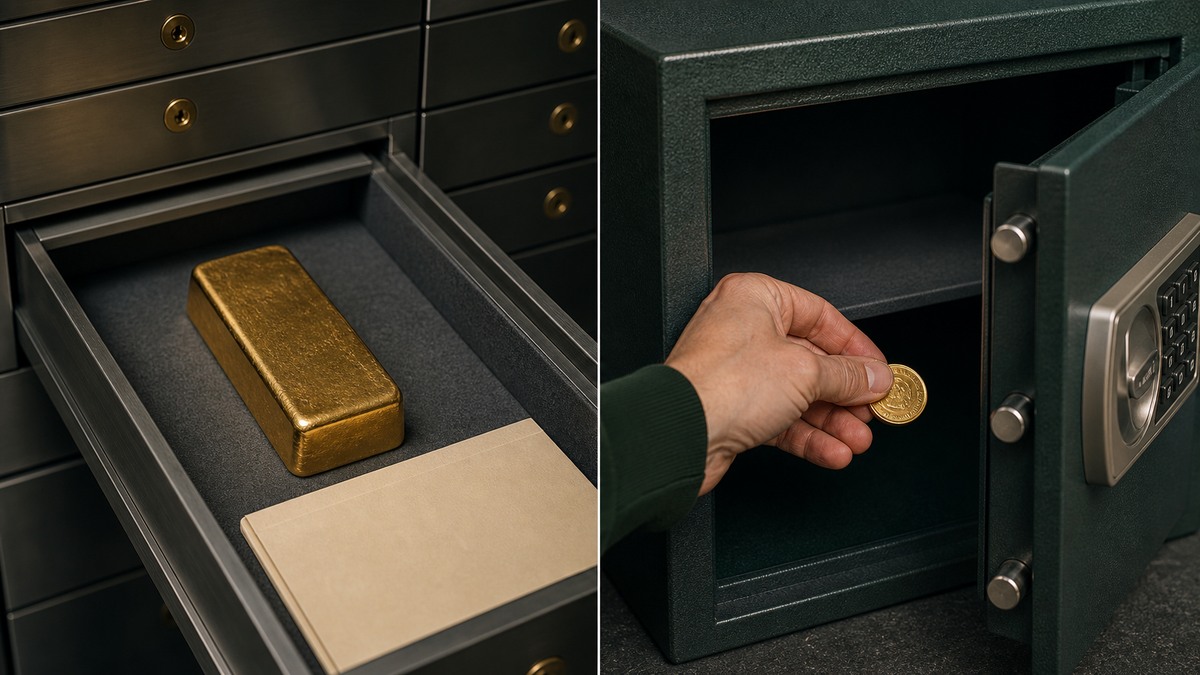
This Gold IRA vs physical gold comparison explains why IRA-owned metals and personally owned coins or bars are not the same thing.
Both can involve exposure to physical precious metals. The difference is the ownership structure. A Gold IRA is a retirement account arrangement that may hold certain eligible metals through a custodian and approved storage setup. Physical gold held personally is owned outside an IRA, with the owner responsible for storage, insurance decisions, documentation, and eventual selling logistics.
That difference matters. It can affect fees, control, storage, liquidity, tax questions, recordkeeping, and the type of risks a reader needs to understand before taking action.
This guide compares the two in plain English. It is educational only and is not financial, investment, tax, legal, or retirement advice.
Key Takeaways
- A Gold IRA is a retirement-account structure; personally owned physical gold is direct ownership outside an IRA.
- IRA-owned metals generally involve a custodian and depository arrangement, while self-custody puts storage and security decisions on the owner.
- Both paths can involve costs beyond the metal price, including premiums, spreads, storage, insurance, liquidation, or account-level fees.
- Neither structure removes price volatility, liquidity issues, tax questions, or concentration risk.
- Before taking action, compare written fees, storage rules, selling procedures, and professional tax guidance.
Quick Comparison: Gold IRA vs Physical Gold
| Topic | Gold IRA / IRA-Owned Metals | Personally Owned Physical Metals |
|---|---|---|
| Basic structure | A self-directed IRA or similar retirement account that can hold eligible precious metals | Coins, bars, or rounds purchased and owned personally outside an IRA |
| Ownership context | Retirement-account asset | Personal property / non-retirement asset |
| Custody | Administered by an IRA custodian | Controlled by the owner, subject to personal storage decisions |
| Storage | Generally stored through an approved depository arrangement | Stored by the owner, a private vault, bank safe deposit box, or another chosen method |
| Rules | IRA rules, eligible-metals rules, distribution rules, and tax reporting may apply | No IRA account rules, but normal tax, insurance, estate, and recordkeeping questions may still matter |
| Fees | May include setup, annual custodian, storage, transaction, wire, liquidation, and spread/premium costs | May include dealer premiums, shipping, storage, insurance, appraisal, authentication, and selling costs |
| Liquidity | Selling may require custodian/dealer instructions and processing time | Selling may involve a dealer, local buyer, online platform, authentication, shipping, and pricing spreads |
| Control | More rules and third-party administration | More direct control, but also more personal responsibility |
| Main tradeoff | Retirement-account structure with added rules and costs | Direct possession/control with added self-custody and security responsibility |
The point is not that one structure is automatically better. The point is that they solve different problems and create different responsibilities.
What a Gold IRA Means in Plain English
A Gold IRA is usually a self-directed individual retirement account that can hold certain eligible precious metals. The account is still an IRA. It is not the same as buying a few coins personally and putting them in a home safe.
In a typical Gold IRA structure, several roles may be involved:
- A custodian administers the IRA and handles required account records and reporting.
- A precious-metals dealer or provider may sell eligible metals and help explain the process.
- A depository stores IRA-owned metals under the account arrangement.
The exact setup can vary by provider, custodian, account type, and storage arrangement. Readers who need the foundation first should start with SGI’s beginner guide: What Is a Gold IRA? A Beginner’s Guide for Retirement Investors.
A key point: IRA-owned metals are generally not treated like personally owned coins or bars. Taking possession of metals connected to an IRA without understanding the rules can create tax and account issues. Readers should verify account rules with the custodian and a qualified tax professional before making decisions involving retirement assets.
What Personally Owned Physical Gold Means
Personally owned physical gold usually means coins, bars, or rounds purchased outside a retirement account. The owner may buy from a dealer, local coin shop, online platform, or another source. The metals are not held inside an IRA unless a separate retirement-account structure is involved.
This can feel simpler because there is no IRA custodian, no IRA depository requirement, and no retirement-account paperwork for the purchase itself. But “simpler” does not mean risk-free or maintenance-free.
Personal ownership creates its own questions:
- Where will the gold be stored?
- How will it be insured, if at all?
- How will purchases and sales be documented?
- How will authenticity be verified?
- What premiums, spreads, shipping, and selling costs apply?
- What tax reporting or professional guidance may be needed later?
- What happens if the owner dies, moves, loses records, or needs to sell quickly?
Physical gold outside an IRA gives the owner more direct control. It also puts more responsibility on the owner.
Custody and Control Differences
Custody is one of the clearest differences.
With a Gold IRA, the account is administered through a retirement-account structure. The investor does not simply hold the IRA metals like ordinary personal property. A custodian and storage arrangement are part of the setup. That structure may appeal to readers who want precious-metals exposure inside a retirement account, but it also adds rules and administrative steps.
With personally owned physical gold, the owner generally has more direct control. They decide what to buy, where to store it, when to move it, and how to sell it, subject to normal laws, dealer policies, and practical constraints.
That control can be useful, but it is not the same as safety. Direct possession can introduce theft risk, loss risk, storage mistakes, insurance gaps, family access issues, and documentation problems. A person who wants direct control should also be ready to handle the responsibilities that come with it.
Storage Differences: Depository vs Self-Custody
Storage is where many readers confuse Gold IRAs and physical gold.
IRA-owned metals are generally stored through an approved depository arrangement connected to the IRA. The details can vary, including whether storage is described as segregated or non-segregated, what fees apply, how metals are recorded, what statements are provided, and what procedures apply if the investor later sells or takes a distribution.
Personally owned physical gold can be stored in several ways, including:
- A home safe
- A bank safe deposit box
- A private vault
- A professional storage provider
- Another personal storage arrangement
Each option has tradeoffs. Home storage may offer access but can create theft, insurance, and household-security concerns. Bank safe deposit boxes may have access limits and may not be insured by default. Private vault storage may add cost and third-party procedures. There is no storage choice that removes every risk.
For Gold IRA terms such as custodian, depository, dealer spread, segregated storage, and liquidation, readers can use the Gold IRA Glossary.
Fees and Pricing Differences
Both Gold IRAs and personally owned physical gold can involve costs beyond the quoted metal price.
A Gold IRA may include:
- Account setup fees
- Annual custodian or administration fees
- Storage fees
- Transaction fees
- Wire or processing fees
- Dealer premiums or spreads
- Liquidation or account-closing costs
- Potential differences between buy and sell pricing
Personally owned physical gold may include:
- Dealer premiums over spot price
- Shipping costs
- Payment-method fees
- Insurance or storage costs
- Authentication or appraisal costs
- Selling spreads or commissions
- Potential shipping/handling costs when selling
The fee comparison is not always obvious. A Gold IRA may have more visible account-level fees. Physical gold may have fewer account fees but still involve premiums, spreads, storage costs, and selling friction.
Before requesting a kit or speaking with a provider, readers should review Gold IRA Fees Explained: Setup, Storage, Pricing, and Other Costs to Ask About. Fee clarity is one of the most important parts of comparing any precious-metals path.
Liquidity and Selling Differences
Liquidity means how easily an asset can be converted to cash and what costs, delays, or pricing differences may apply.
In a Gold IRA, selling metals may require instructions through the custodian, dealer, or provider process. The investor may need to understand how prices are quoted, what spreads apply, how long liquidation takes, whether any fees apply, and how cash is returned to the IRA or distributed according to account rules.
With personally owned physical gold, the owner may sell to a local dealer, online dealer, private buyer, coin shop, or another marketplace. That can offer flexibility, but it also introduces practical questions:
- Who is the buyer?
- How is authenticity verified?
- What price is being offered compared with spot price?
- Are there shipping, insurance, or payment risks?
- How quickly is payment received?
- Are records complete enough for tax and personal documentation purposes?
A buyback policy from a provider or dealer can be useful to review, but it should not be treated as a guaranteed future price. Ask how pricing is determined, whether the policy can change, and what fees or conditions may apply.
Tax and Retirement-Account Rule Differences
A Gold IRA is a retirement account. That means account type, contributions, transfers, rollovers, distributions, required minimum distributions, penalties, and tax reporting can matter.
For example, moving money from a 401(k) or another IRA into a Gold IRA is not the same as buying gold personally with cash. Retirement-account movement may involve direct transfers, rollovers, plan rules, deadlines, withholding questions, and professional tax review.
Readers considering rollover mechanics should review How to Roll Over a 401(k) Into a Gold IRA: Steps, Rules, and Questions to Ask before starting paperwork.
Personally owned physical gold is outside the IRA structure, so IRA contribution and distribution rules generally do not apply to that personal purchase. But that does not mean taxes are irrelevant. Sales, gains, documentation, estate planning, and other tax questions may still matter. Readers should consult qualified tax and legal professionals for their specific situation.
For general background on IRA rules, readers can review the IRS page on Individual Retirement Arrangements, along with IRS Publication 590-A and IRS Publication 590-B. These are general references, not personalized guidance for any specific rollover, transfer, purchase, sale, or distribution.
Also, “Gold IRA” and “Traditional IRA” are not always opposite categories. A Gold IRA may be structured as a Traditional IRA, Roth IRA, SEP IRA, or another permitted account type depending on the setup. SGI covers that distinction in Gold IRA vs. Traditional IRA: Key Differences Retirement Savers Should Understand.
Risk Differences Neither Option Removes
Gold ownership, whether inside or outside an IRA, does not remove risk.
Important risks and tradeoffs can include:
- Price volatility
- No guaranteed return
- No income generation from the metal itself
- Dealer premiums and buy/sell spreads
- Storage costs or security concerns
- Liquidity delays or unfavorable selling prices
- Counterparty and service-provider issues
- Recordkeeping and tax complexity
- Concentration risk if too much of a household’s assets are tied to one asset type
A Gold IRA may reduce some self-custody burden by using a depository arrangement, but it adds account rules and fees. Personally owned gold may provide direct control, but it adds storage, security, insurance, and personal documentation responsibilities.
For a broader balanced review, read Gold IRA Pros and Cons: What Retirement Investors Should Know First.
Questions to Ask Before Choosing a Path
Before comparing a Gold IRA with personally owned physical gold, slow down and ask practical questions.
Questions about a Gold IRA
- What exact account type is being opened or transferred?
- Which custodian administers the account?
- Which depository stores the metals?
- Are the metals eligible for IRA ownership under applicable rules?
- What are all setup, annual, storage, transaction, wire, liquidation, and closing fees?
- How are buy prices and sell prices quoted?
- What premiums, spreads, or commissions apply?
- What happens if the investor wants to sell metals later?
- What happens when distributions or required minimum distributions become relevant?
- What written risk disclosures, account agreements, and fee schedules are available before funding?
Questions about personally owned physical gold
- What exact coins, bars, or rounds are being purchased?
- What is the premium over spot price?
- How does the dealer make money on the transaction?
- How will authenticity be verified?
- Where will the metals be stored?
- Is insurance available or appropriate?
- Who else needs to know where records or metals are located?
- How would the metals be sold if cash were needed?
- What documents should be kept for tax and estate purposes?
- What security risks does the storage method create?
A written checklist can help readers compare fees, custody terms, storage arrangements, dealer pricing, liquidity procedures, and risk factors without treating any single provider or dealer as the default choice.
Free checklist
Get the Gold IRA Provider Questions Checklist.
Join for occasional educational notes about gold IRAs, rollover rules, fees, risks, and provider research. Your welcome email includes the checklist download link.
When It May Make Sense to Keep Researching a Gold IRA
A Gold IRA may be worth researching further for someone who wants to understand precious-metals exposure inside a retirement-account structure and is willing to compare custodians, storage arrangements, fees, rules, and liquidity procedures carefully.
That does not mean a Gold IRA is appropriate for every retirement saver. Some readers may decide the extra fees, storage rules, paperwork, or liquidity tradeoffs are not a fit. Others may decide the structure deserves further review with a financial professional.
The useful next step is not urgency. It is written information, fee comparison, and qualified review.
When It May Make Sense to Keep Researching Personally Owned Physical Gold
Personally owned physical gold may be worth researching further for someone who wants to understand direct ownership outside an IRA and is prepared to handle storage, security, insurance, documentation, and selling logistics.
That does not mean personal ownership is simple or automatically better. A reader who wants self-custody should think carefully about theft risk, household access, storage location, insurance limitations, disaster risk, dealer selection, and how heirs or trusted contacts would handle records if needed.
Direct control can be appealing. It also shifts more responsibility to the owner.
Physical metals dealer research option
Research physical gold and silver pricing
If you are comparing personally owned coins, bars, or rounds outside an IRA, JM Bullion lists online pricing for physical gold, silver, platinum, palladium, and related bullion products. Use dealer pricing as one research input, not as a recommendation to buy.
- Compare premiums, spreads, shipping, insurance, storage, and payment terms before placing an order.
- Review authenticity, return, cancellation, buyback, and liquidation policies in writing.
- Consider qualified tax, financial, legal, or insurance guidance when personal circumstances require it.
Affiliate disclosure: SilverGoldInvestor.com may receive compensation if you visit or purchase through this link. Compensation does not change our educational cautions or create a personalized recommendation.
Bottom Line
This Gold IRA vs physical gold comparison comes down to structure, control, cost, storage, and responsibility.
A Gold IRA is a retirement-account arrangement with custodial administration, storage rules, eligible-metal requirements, fees, and retirement-account tax considerations. Personally owned physical gold is held outside an IRA and offers more direct control, but it also creates self-custody, security, insurance, documentation, and selling responsibilities.
Neither option is risk-free. Neither option is automatically right for every reader. The better question is what structure the reader is actually researching, what responsibilities come with it, what written costs apply, and what qualified professionals should review before money moves.
Next Step
If the Gold IRA structure is still unclear, start with What Is a Gold IRA? A Beginner’s Guide for Retirement Investors.
If costs are the main question, read Gold IRA Fees Explained before requesting any kit or consultation.
If you want a broader list of IRA education pages, visit Gold IRA Articles and Guides.
If you continue researching Gold IRA providers, do it after reviewing the rules, costs, risks, storage differences, and questions above. Requesting information from a provider should be treated as research, not as a recommendation to open an account, buy metals, or move retirement money.